Episode 0 · Listening Station - Series Intro · Series 01: The Listening Station
What is a listening station, and what can one hear?
- Release
- Length
- 2:19
- On the dial
- All of it
What it covers
The air is full of radio signals that anyone with the right radio can receive. I built a listening station at home, on an island in the Puget Sound: antennas, small radios and small computers. It only receives. In just over two minutes, this trailer shows what it hears, from aircraft overhead to the sun. Each part gets its own short video, with the real tools linked.
Chapters
- 0:00Intro
- 0:52What it hears
- 1:37This channel
Frames from the draft
What is simplified, and what is invented
- The house is a generic drawing, not my house. Nothing is to scale.
- The three steps (antennas, small radios, small computers) are simplified. Filters, splitters and my home network are left out, and one of the computers is an old office PC, not a small one.
- Every aircraft, ship and dot in the drawings is a generic mark at an invented position. No real traffic and no real stations are shown.
- The regional chart has no mark for my station and is not centered on it. Its coastline is Natural Earth (public domain), drawn coarse.
- The point labelled "the Puget Sound" on the world map shows the region only. The world coastline is Natural Earth 1:110m (public domain).
- Paths on the world map are drawn as great-circle lines. Real shortwave signals bounce off the sky on the way.
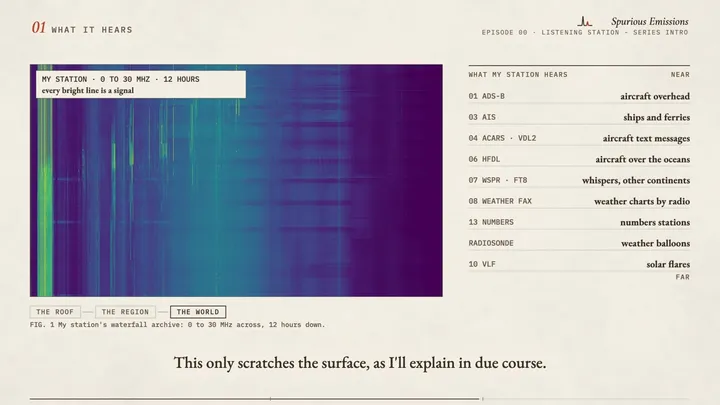
- The small weather chart and the very low frequency trace with a solar flare are drawings, not received data.
- "Weather charts with no internet" is simplified: many ships have satellite links today.
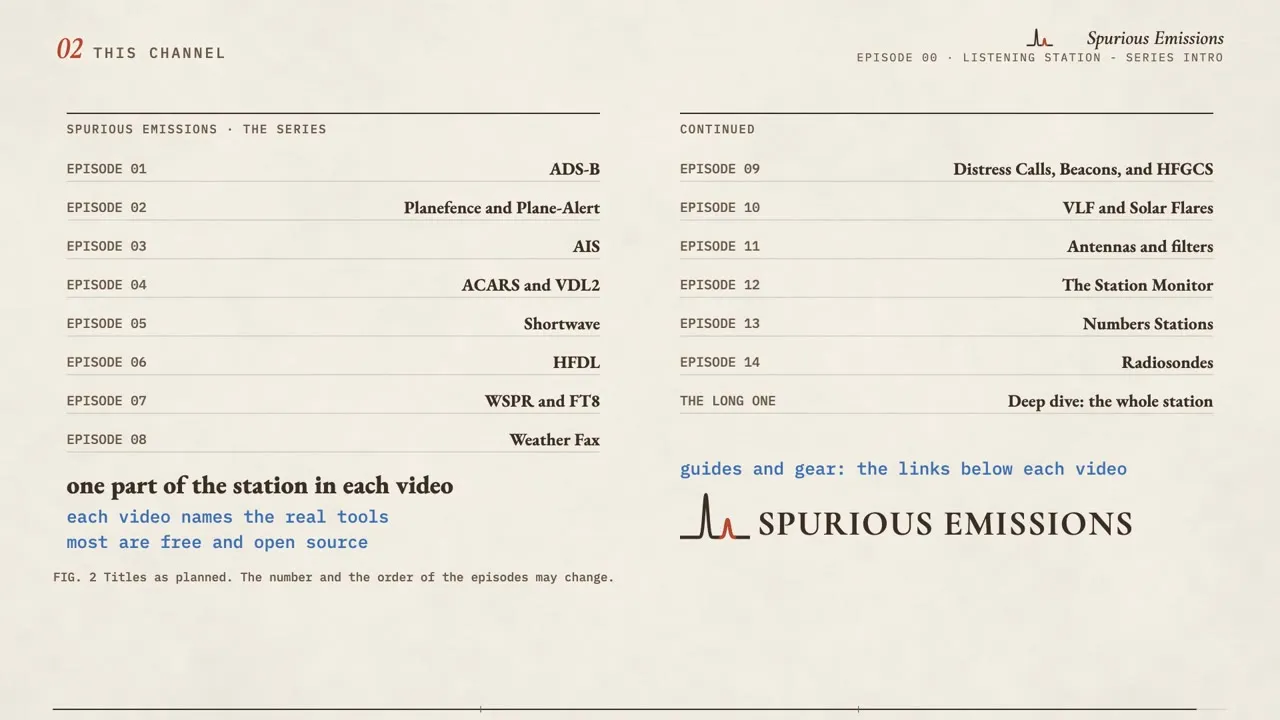
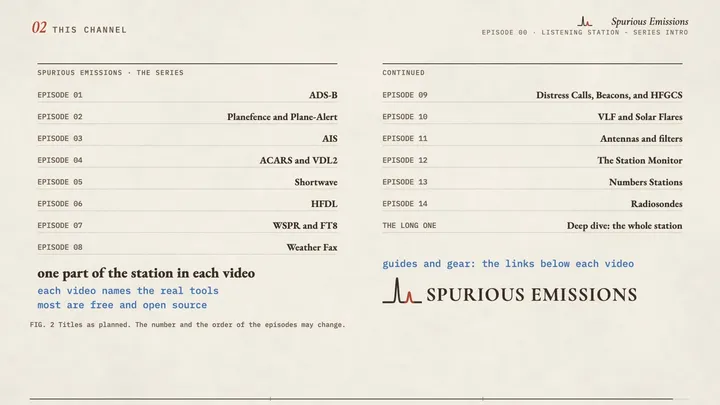
- The episode table shows the planned titles. Episodes 9 to 12 and the deep dive were not made yet when this trailer was drafted.
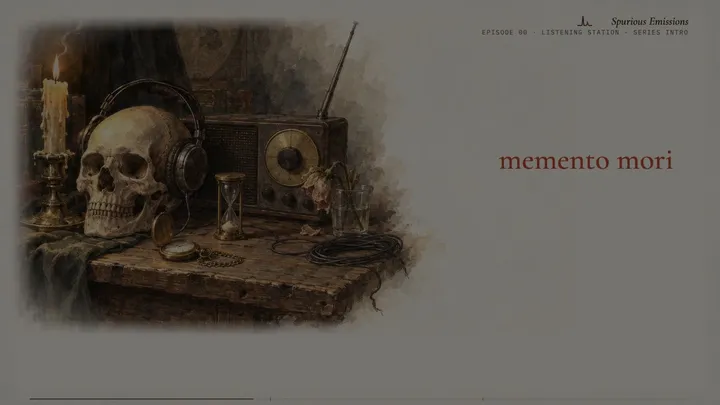
- The music under "memento mori" is the Dies irae theme from Berlioz's Symphonie fantastique (arr. Jack T. Kline), played by the U.S. Navy Band Concert Band: a U.S. government recording, in the public domain (Wikimedia Commons).